|
KURT A. LANGFELD’S
AUTHOR
|
A story of mystery, technology, humanity, and an extraordinary journey into the future.
|
|


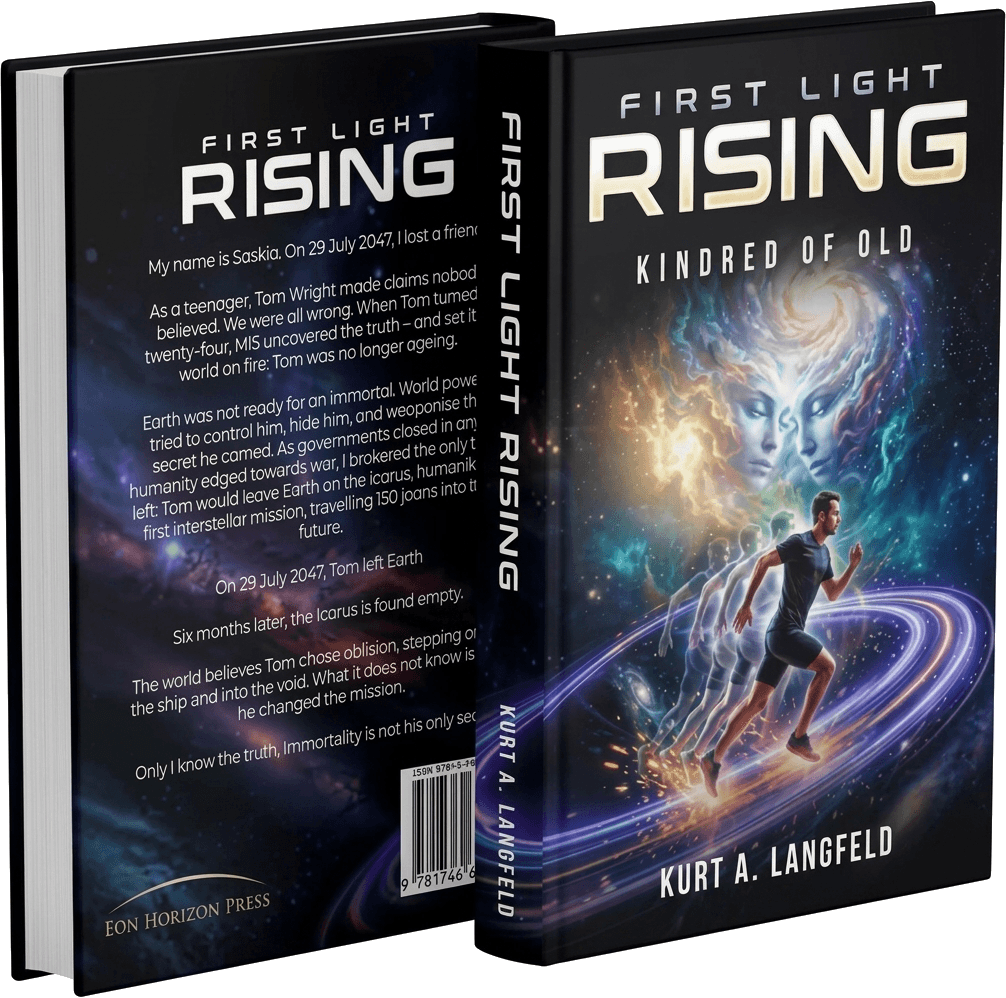
KINDRED OF OLD
What would humanity do if immortality were no longer just a dream?
The future has arrived. And with it comes a secret powerful enough to change the course of human history.
|
|
|
|
|
THE STORY BEGINS
In First Light Rising: Kindred of Old, Kurt A. Langfeld takes readers on a journey that begins with Saskia Sorensen, a young woman whose exceptional ability to understand people draws her from the classroom into the shadowy world of intelligence and diplomacy.
What begins as a test of her profiling skills soon becomes something much bigger. Saskia encounters people, technologies, and mysteries that challenge everything she believes she understands. As the story moves deeper into the future, the stakes expand from individual lives to the destiny of humanity itself.
|
|

|
|
|
At the heart of the story lies a question:
What happens when humanity discovers
the possibility of immortality?
And more importantly...

|
|
|
FROM A SECRET GUARDED BY GCHQ TO A TRUTH WAITING AMONG THE STARS.
|
|
The novel blends espionage, psychological intrigue, futuristic technology, diplomacy, human relationships, and space exploration into a story spanning generations.
|
|
From Saskia’s first high-stakes encounter at GCHQ to the mysteries surrounding Tom Wright, the narrative continually raises new questions about technology, identity, human potential, and the future.
|
|
The opening chapter immediately places readers in a tense Code-Red situation, where Saskia must use observation and psychological insight to prevent a hostage crisis from turning deadly.
|
|
But that’s only the beginning.
|
|
| |
THE FUTURE IS WAITING.
If you’re drawn to stories that combine mystery, science fiction, intelligence, futuristic technology, and big questions about humanity, First Light Rising: Kindred of Old offers a journey into a future where the impossible may no longer be impossible.
WILL HUMANITY BE READY FOR WHAT COMES NEXT?
|
|
|
|
|
